What is the Reggio Emilia Approach?
The Reggio Emilia Approach is an innovative and inspiring educational philosophy that originated in the town of Reggio Emilia, Italy, after World War II. Developed by educator Loris Malaguzzi and local parents, this approach emphasizes child-centered learning, creativity, and collaboration. It has since gained global recognition as a model for early childhood education, inspiring schools and childcare centers worldwide, including KIDazzle Child Care.
At its core, the Reggio Emilia Approach views children as capable, curious, and full of potential. It focuses on fostering their natural curiosity and encouraging them to explore, question, and construct their own understanding of the world. Unlike traditional teaching methods, this approach prioritizes the process of learning over the end result, making it a dynamic and engaging way to nurture young minds.
Key Principles of the Reggio Emilia Approach
The Reggio Emilia Approach is built on several foundational principles that guide its implementation. These principles create a unique learning environment that supports children’s holistic development.
1. The Child as an Active Participant
- Children are seen as competent and capable learners who actively construct their own knowledge.
- They are encouraged to take the lead in their learning journey, exploring topics that interest them and asking questions.
2. The Role of the Environment
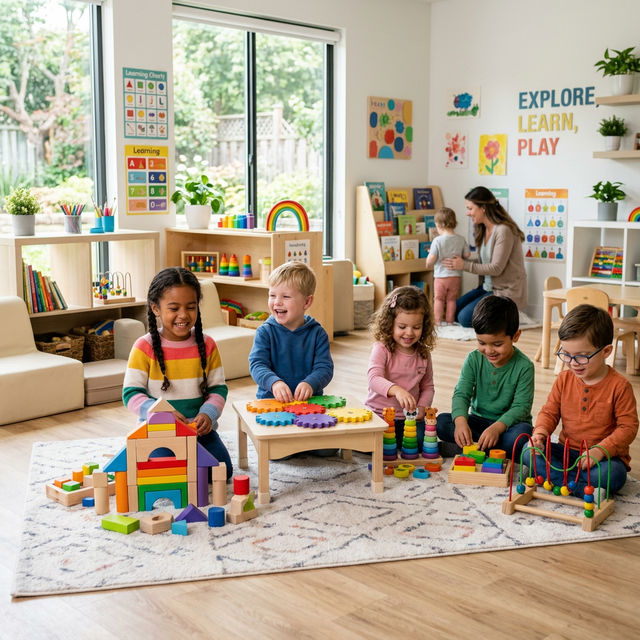
- The classroom is often referred to as the “third teacher,” designed to be inviting, flexible, and stimulating.
- Spaces are filled with natural light, open-ended materials, and opportunities for exploration, fostering creativity and collaboration.
3. Project-Based Learning
- Learning is often organized around long-term projects that emerge from children’s interests.
- These projects encourage deep investigation, critical thinking, and problem-solving skills.
4. Collaboration and Relationships
- Collaboration is central to the Reggio Emilia Approach, whether it’s between children, teachers, or parents.
- Teachers act as facilitators and co-learners, guiding children through their discoveries.
5. Documentation
- Teachers document children’s learning processes through photos, videos, and written observations.
- This documentation helps children reflect on their experiences and allows parents to stay informed about their child’s progress.
Why the Reggio Emilia Approach Works
The Reggio Emilia Approach has proven to be highly effective in nurturing children’s intellectual, emotional, and social development. Here’s why it’s so impactful:
Encourages Critical Thinking
- By focusing on inquiry-based learning, children learn to ask questions, analyze information, and think critically.
Fosters Creativity
- The emphasis on art, imagination, and self-expression helps children develop creative problem-solving skills.
Builds Confidence
- Children are empowered to take ownership of their learning, which boosts their confidence and self-esteem.
Promotes Collaboration
- Working together on projects teaches children the value of teamwork and communication.
Supports Individuality
- The approach respects each child’s unique interests, strengths, and learning styles, ensuring they feel valued and understood.
How KIDazzle Child Care Incorporates the Reggio Emilia Approach
At KIDazzle Child Care, we believe in providing a nurturing and stimulating environment that aligns with the principles of the Reggio Emilia Approach. Here’s how we bring this philosophy to life:
Child-Centered Learning
- Our curriculum is designed to follow the interests and curiosities of the children in our care, ensuring they remain engaged and motivated.
Inspiring Environments
- Our classrooms are thoughtfully designed to encourage exploration and creativity, with natural materials, art supplies, and sensory experiences.
Project-Based Activities
- We facilitate long-term projects that allow children to dive deep into topics they’re passionate about, fostering a love for learning.
Strong Partnerships with Parents
- We believe in the importance of collaboration between educators and families, working together to support each child’s development.
Comprehensive Documentation
- Through detailed documentation, we provide parents with insights into their child’s learning journey and celebrate their achievements.
The Reggio Emilia Approach in Action: A Day at KIDazzle
Imagine a day at KIDazzle Child Care through the lens of the Reggio Emilia Approach:
- Morning Exploration: Children arrive and begin their day by choosing activities that interest them, whether it’s painting, building with blocks, or exploring nature.
- Project Work: The class gathers to discuss a project they’ve been working on, such as creating a garden. They brainstorm ideas, conduct research, and collaborate on tasks.
- Outdoor Learning: The children head outside to observe plants, insects, and the changing seasons, connecting their project to the real world.
- Reflection and Documentation: At the end of the day, the teacher shares photos and notes from the day’s activities, encouraging the children to reflect on what they’ve learned.
Benefits for Parents and Families
The Reggio Emilia Approach isn’t just beneficial for children—it also offers advantages for parents and families:
- Transparency: Regular documentation keeps parents informed about their child’s progress and learning experiences.
- Involvement: Parents are encouraged to participate in their child’s education, fostering a strong home-school connection.
- Peace of Mind: Knowing their child is in an environment that values individuality and creativity gives parents confidence in their childcare choice.
Choosing the Right Childcare Program
If you’re considering a childcare program that embraces the Reggio Emilia Approach, here are a few things to look for:
- Child-Centered Curriculum: Ensure the program prioritizes the interests and needs of the children.
- Engaging Environment: Look for classrooms that are designed to inspire curiosity and creativity.
- Experienced Educators: Teachers should be trained in the Reggio Emilia philosophy and act as guides rather than instructors.
- Parent Involvement: A strong partnership between educators and families is essential for success.
Conclusion
The Reggio Emilia Approach is more than just an educational philosophy—it’s a way of honoring and nurturing the potential of every child. At KIDazzle Child Care, we’re proud to incorporate these principles into our programs, creating a supportive and enriching environment where children can thrive. By fostering curiosity, creativity, and collaboration, we help lay the foundation for a lifetime of learning and success. If you’re looking for a childcare provider that prioritizes your child’s individuality and growth, KIDazzle is here to support your family every step of the way.